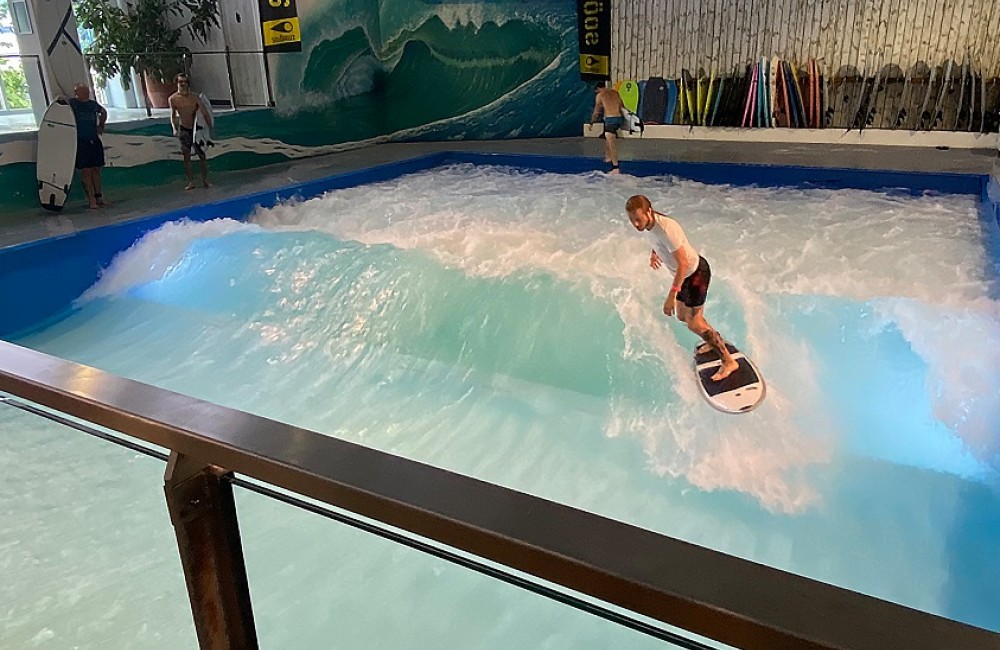

Artificial waves by HYDROSTADIUM

There are currently three types of artificial waves

  • Pulsed-water surf wave : developed in the 1990s, these waves are now outdated due to sensations that are too far removed from natural surfing and the risk of injury;
  • Breaking surf wave : perfectly reproducing the waves found in the ocean, but with excessive land and financial requirements;
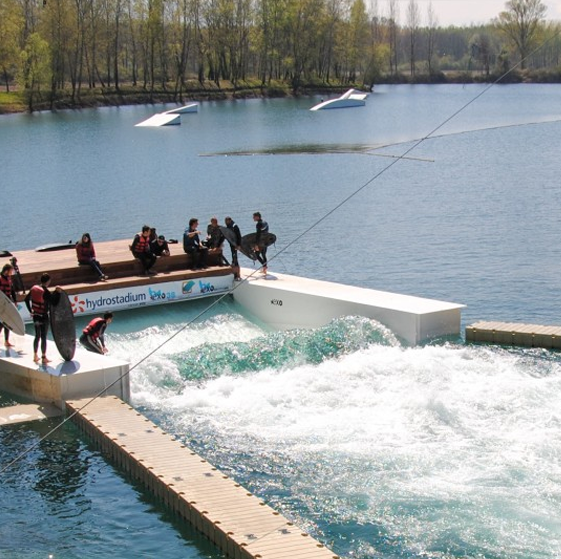
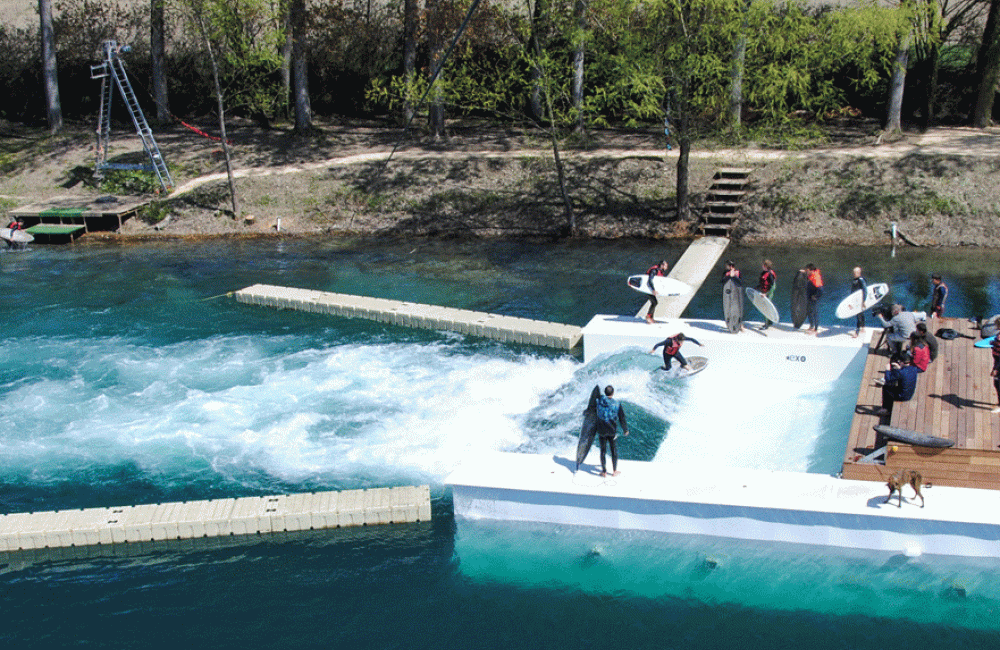
  • River surf wave : combining the advantages of an open-water wave that closely resembles natural surfing, with controlled land use and financial costs.

Discover our
Products

Hydrostadium, creator of a new type of artificial wave

It is this third type of artificial wave that was created, optimized and patented by Hydrostadium as early as 2007.

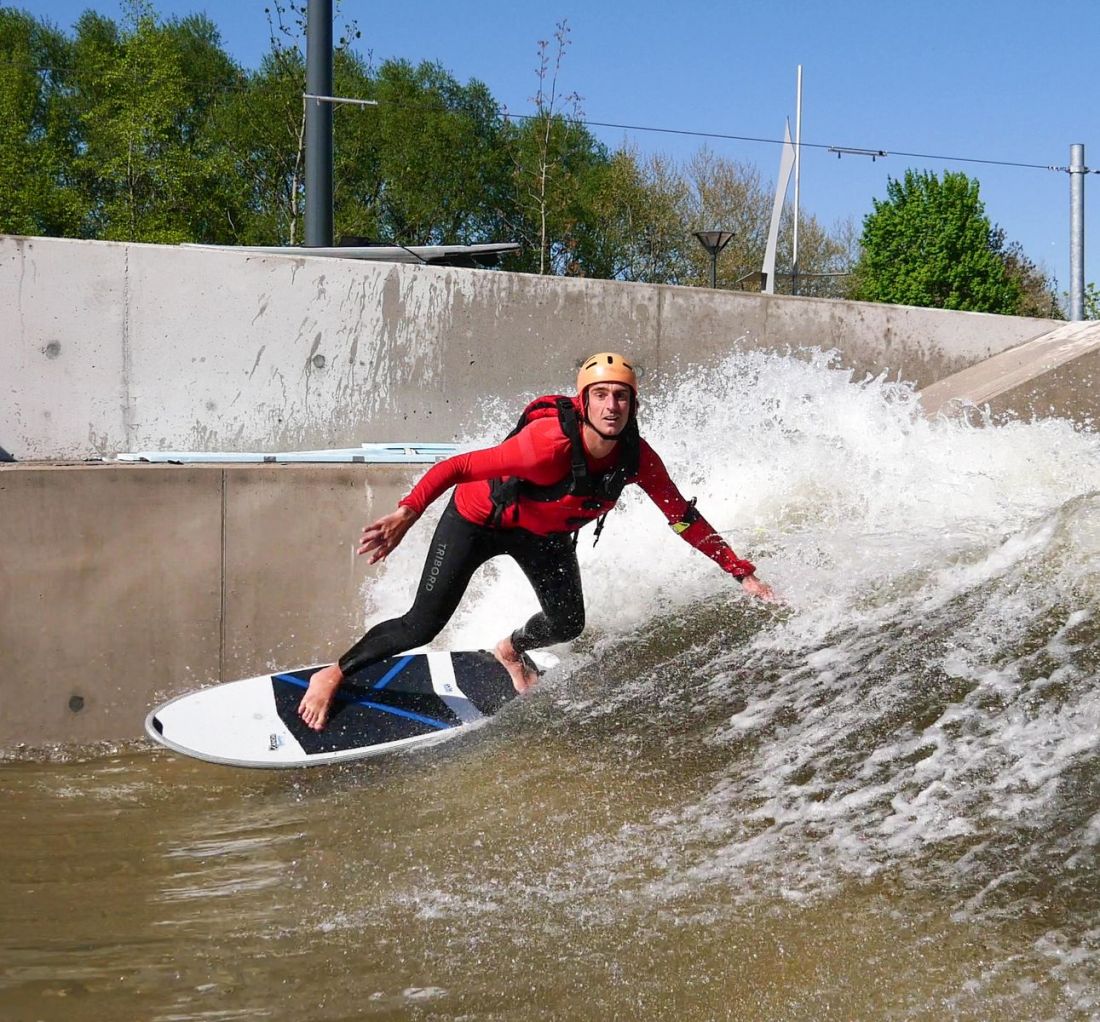
Hydrostadium’s artificial wave technology artificially recreates the waves found in rivers, the best-known example being the natural wave located in the Englischer Garten in Munich. A thick layer of water accelerates down an inclined plane before entering a basin where its speed decreases sharply, thereby creating a hydraulic jump used for surfing.

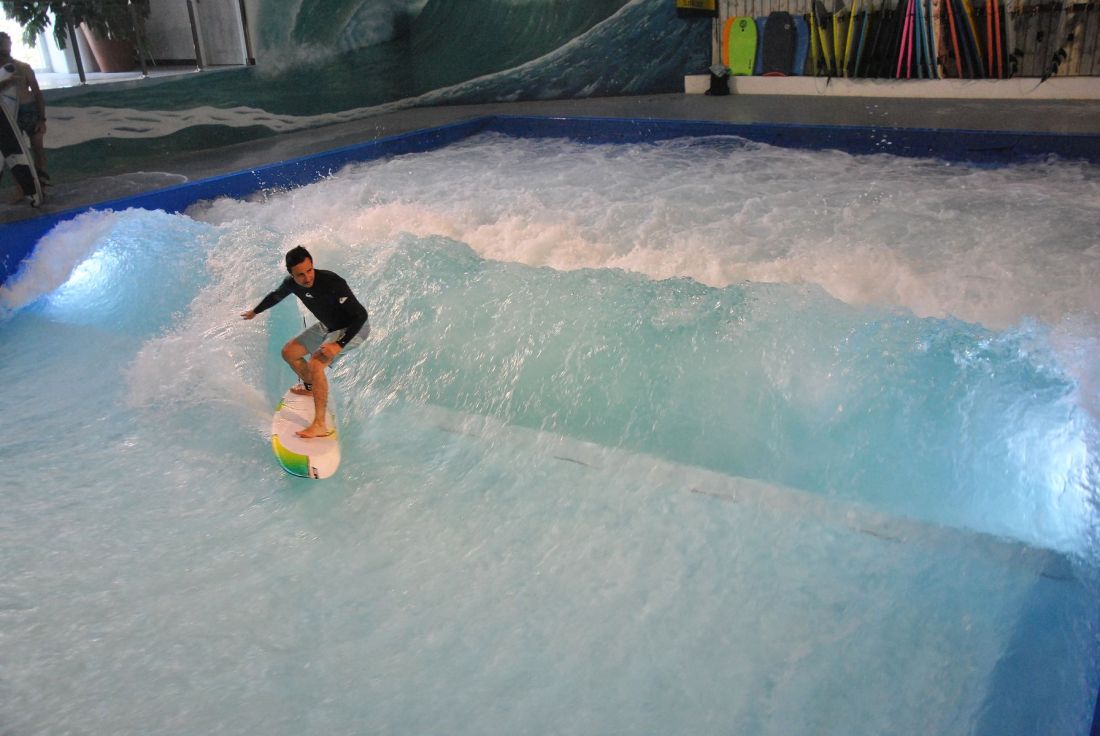
The artificial wave is in open water, allowing the use of equipment similar to that used in natural surfing. It has the advantage of being endless, ensuring unlimited surfing sessions. The thick layer of water and the absence of a profile beneath the artificial wave ensure that surfers do not experience impacts when they fall.
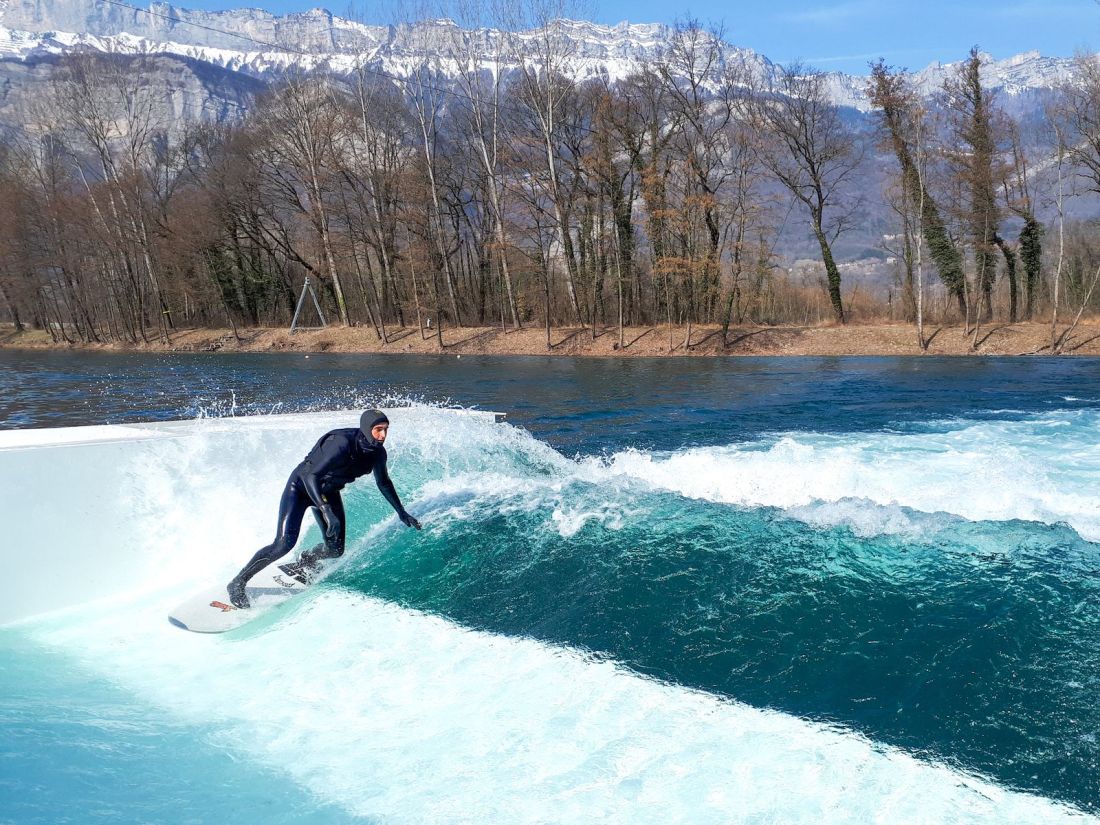
Hydrostadium technology for artificial waves

Hydrostadium technology for artificial waves

Hydrostadium technology was developed along three main lines: 

  • The instant adjustability of the artificial wave in terms of height and shape: The wave can be adjusted from a relatively flat beginner wave of approximately 60 cm to a very steep wave exceeding 1.30 m for experienced surfers wishing to practise technical manoeuvres.
  • The quality of the artificial wave: Hydrostadium technology is equipped with devices that completely smooth the surfing surface. The quality of the ride is therefore excellent.
  • Energy consumption: Hydrostadium’s expertise in hydropower was used to design the most energy-efficient system possible; consumption is less than 300 kWh for a 10 m-wide wave.

In 2017, five European patents complementing the 2007 patent were filed to protect the innovative technology.

The entire Hydrostadium technology can be adapted to a natural water drop, making it possible to create a river wave while partially or completely dispensing with pumps.

Discover our
Projects

Access the details of a project by selecting a point on the map.

Sort projects